
How to Write a Resume That Wins in 2026 — Real Rules
8
-minute read
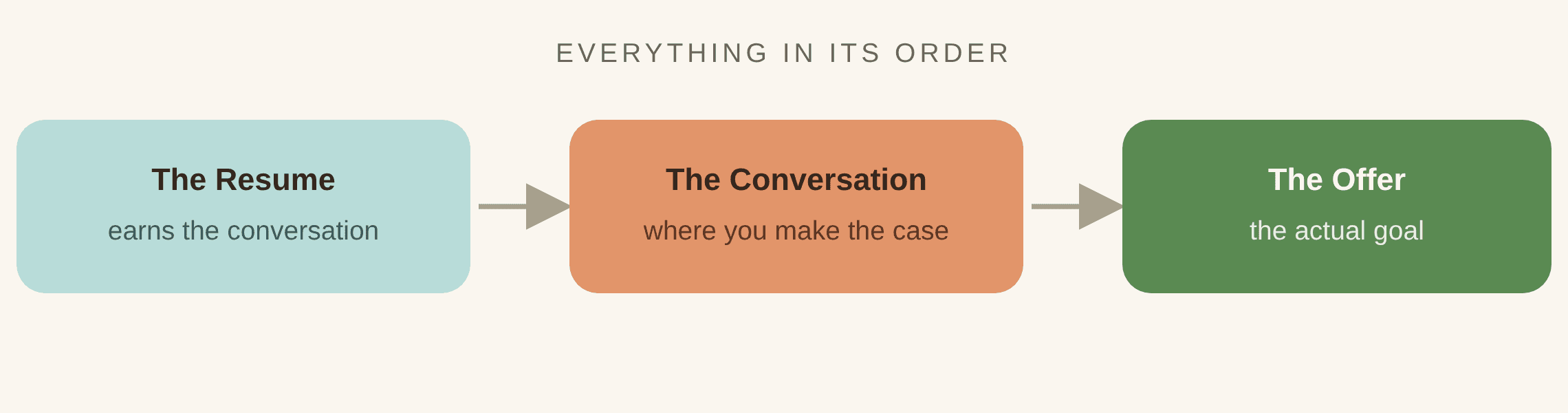
The resume gets you the conversation. It doesn't get you the job.
That one sentence reorders almost everything people get wrong about job searching. Most of us pour our energy into the document and almost none into the outreach. Both matter — but in that order. A resume's job is narrow and real: earn the conversation. Once you see it that way, what belongs on the page gets a lot clearer.
Here's what actually wins right now, what quietly loses, and the two pieces of advice doing the most damage.
What actually wins
Results, not responsibilities. This is the single biggest difference between a resume that gets calls and one that doesn't. "Managed a team" is a job description. "Led a 6-person team that cut onboarding time by 40%" is a result. Every bullet should push toward a specific outcome — even an approximate one. If you're not sure of the exact number, an honest estimate beats a vague verb.
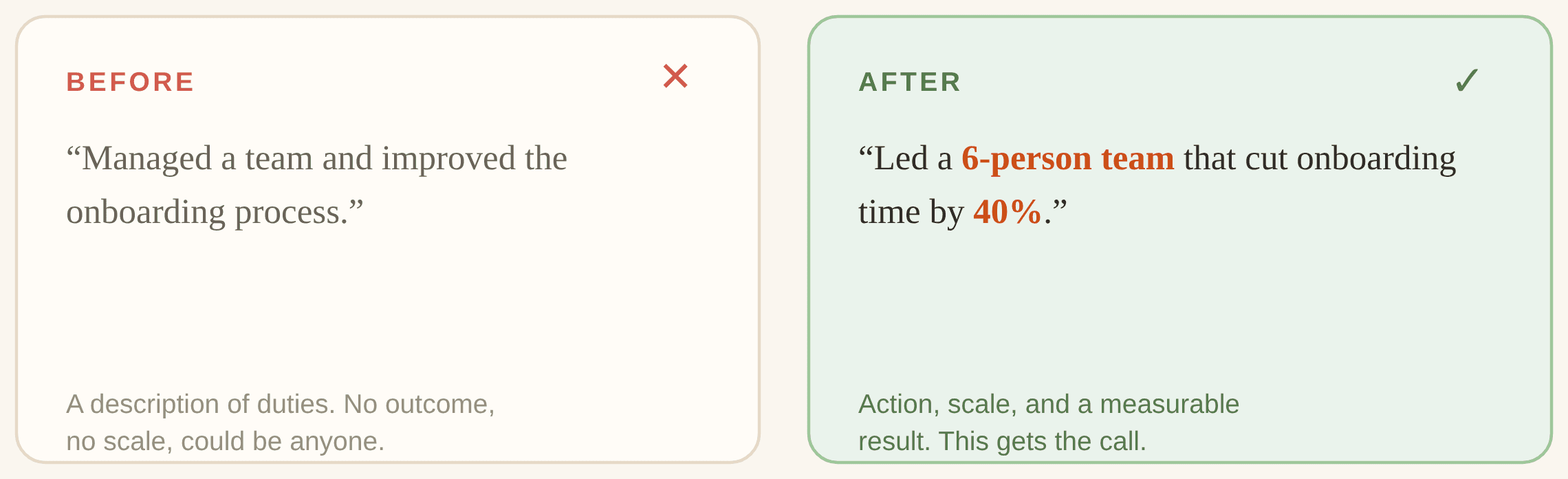
Before: Managed a team and improved the onboarding process. After: Led a 6-person team that cut onboarding time by 40%.
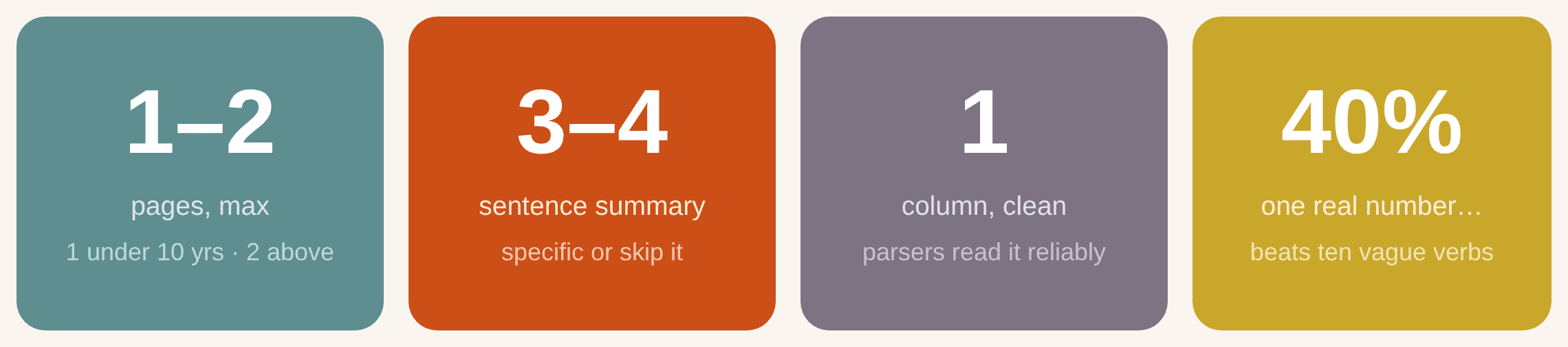
A summary that earns its place. Three to four sentences. A specific professional identity, your clear value, and something distinctive about how you work. A summary that could apply to anyone in your field is worse than no summary at all — it's prime real estate spent saying nothing.
Language that mirrors the role. If the job description says "stakeholder management" and your resume says "working with clients," you lose signal — with both human readers and the AI screening tools now sitting in front of them. Read the posting carefully and match its language without copy-pasting it. This matters more than most people realize.
Clean, single-column formatting. Hiring managers overwhelmingly prefer it, and parsers read it reliably. The exception is design and creative fields, where the resume is also proof of craft.
The right length. One page if you have under ten years of experience. Two pages for everyone else. Three is almost never right.
What loses — and why
Some conventions have quietly expired. These are the ones still costing people interviews:
Objective statements — no one reads them
Tables, columns, text boxes, graphics — ATS and AI parsers frequently fail on these
Skills sections listing software everyone has — it reads as filler
Job duties without results — the most common miss of all
Generic summaries that sound like every other candidate
"References available upon request" — it's assumed, and it wastes a line
First-person pronouns — resume convention is implied third person ("Led," not "I led")
The two biggest misconceptions
"I need to keyword-stuff for ATS." The old advice about gaming applicant tracking systems has been largely overtaken by AI screening tools — which are more sophisticated and actually penalize stuffing. The fix is simpler than the trick it replaces: use standard section headers, avoid complex formatting, and write in the natural language of your field.
"Career changers should use a functional resume." This is one of the most repeated and most damaging pieces of advice out there. Functional resumes — skills-first instead of chronological — consistently underperform with both humans and AI screening. The better move is to keep the chronological structure, reframe your bullets to surface transferable skills, and use the summary to name the transition directly and explain why it's coherent.
What most resume advice ignores
AI writing tools are everywhere now, and they're good at one thing in particular: producing resumes that score well on ATS and read as completely generic to a human. The output is clean. It's also forgettable.
The antidote is the personal narrative — the specific, lived detail that makes a resume sound like a person instead of a template. You can't keyword your way to that. It has to come out of you.
This is exactly why a guide that starts with who you are, before touching the resume, changes the result. The document is the last step, not the first.
Where the real material lives
When you sit down to work on a resume, the most valuable part usually isn't the editing — it's the excavation. Most people have real results they never wrote down. They just don't know they're allowed to claim them, or it never occurred to them to put a number on it.
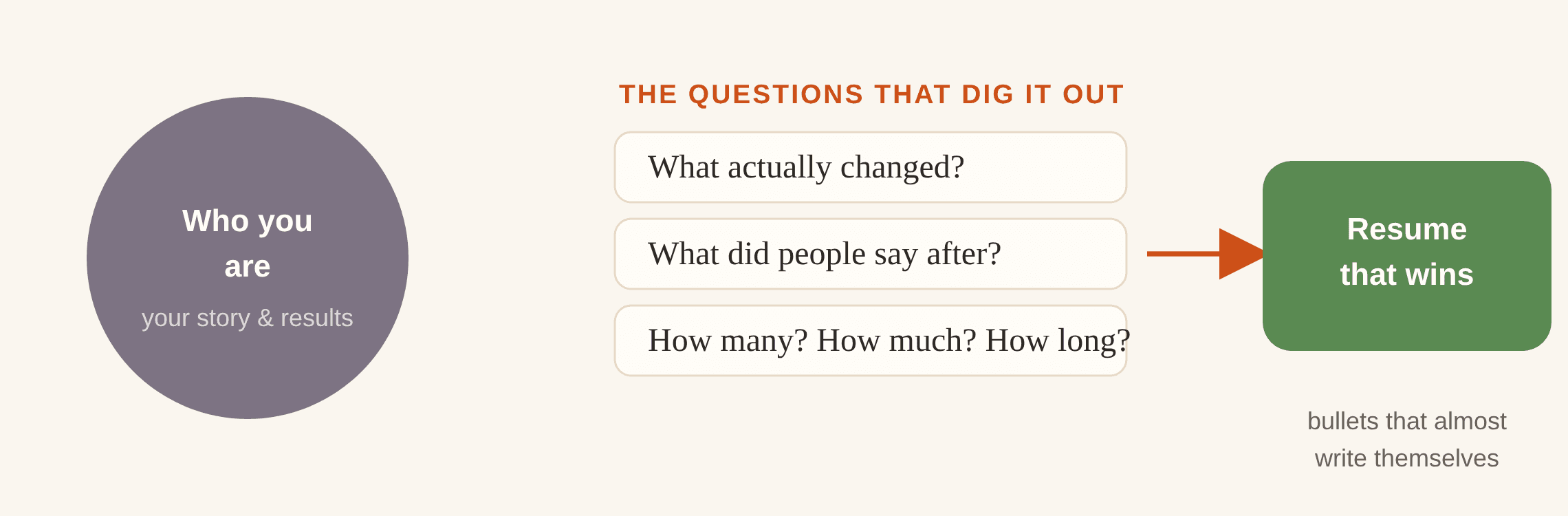
That's where the strongest resume material has been sitting the whole time — usually undervalued, often forgotten. Pull it out, and the bullets almost write themselves.
phae is built around exactly this. Before editing a single line, the guidance starts with your story — the results, the turning points, the things you'd never think to claim — and works outward to the page. The resume gets you the conversation. Knowing who you are is what makes the conversation worth having.
phae is the guide that helps you flourish in a world that won't stop changing. From who you are to work that fits.